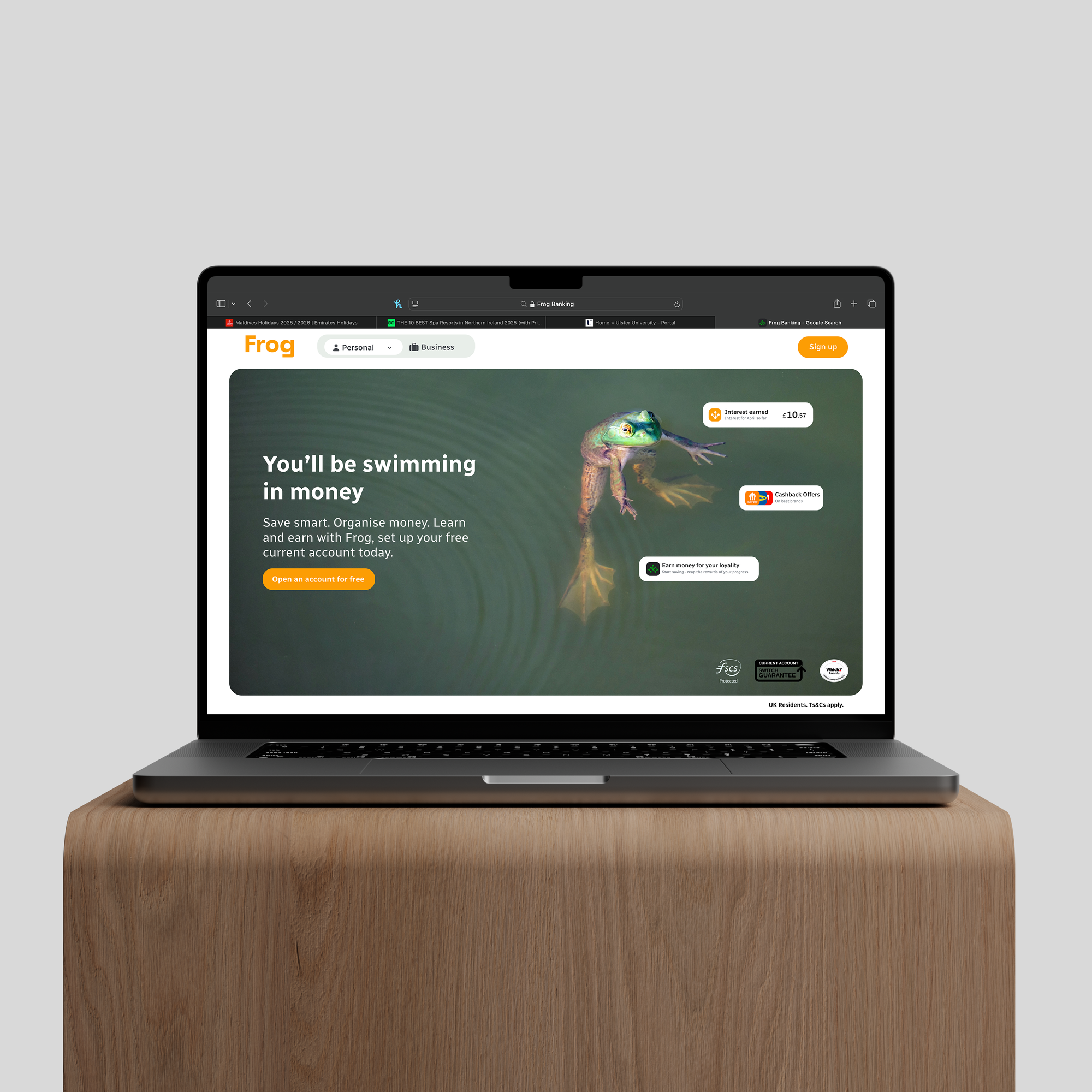
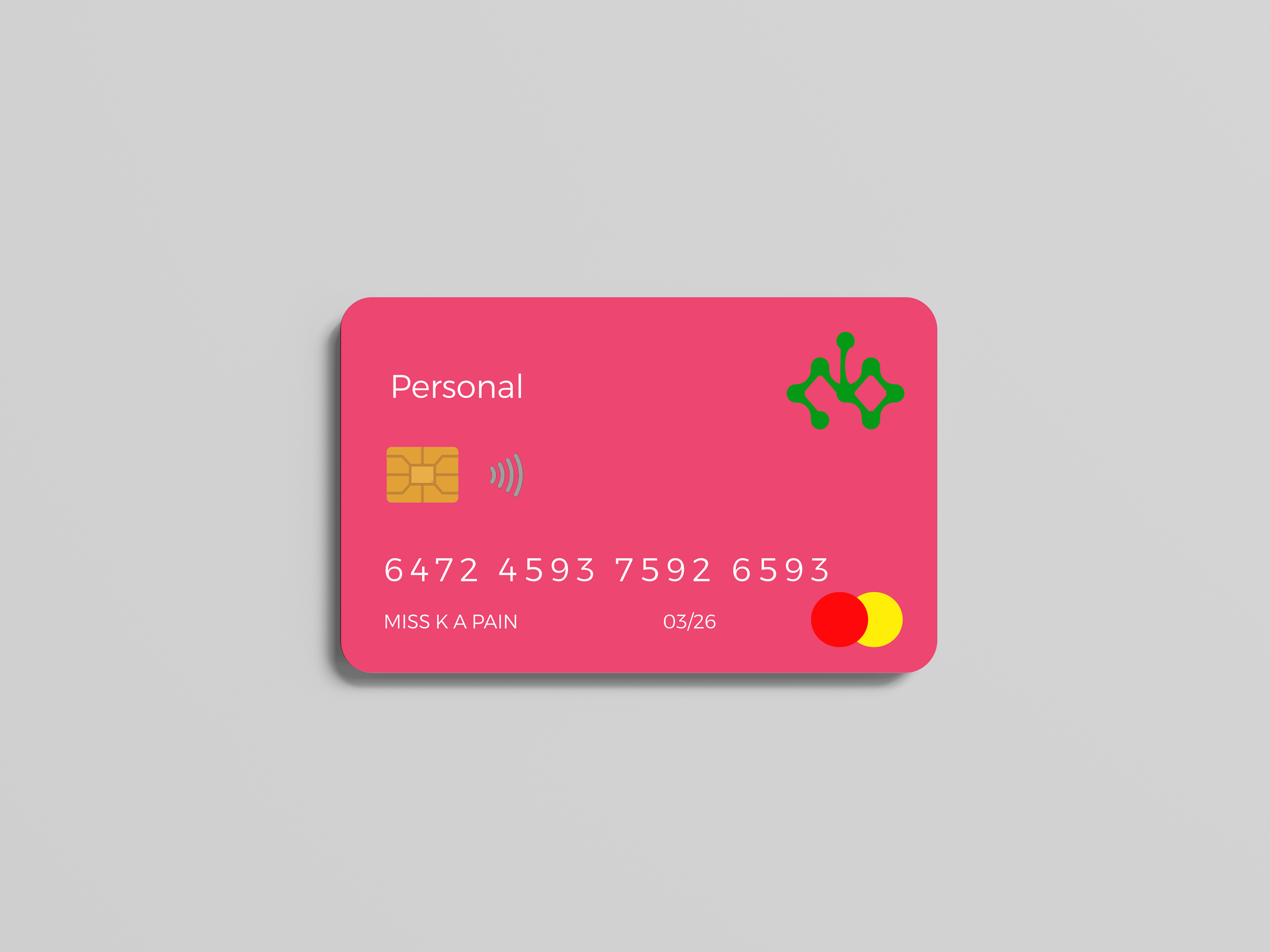
Frog
Young Adults (16-24) Banking Application
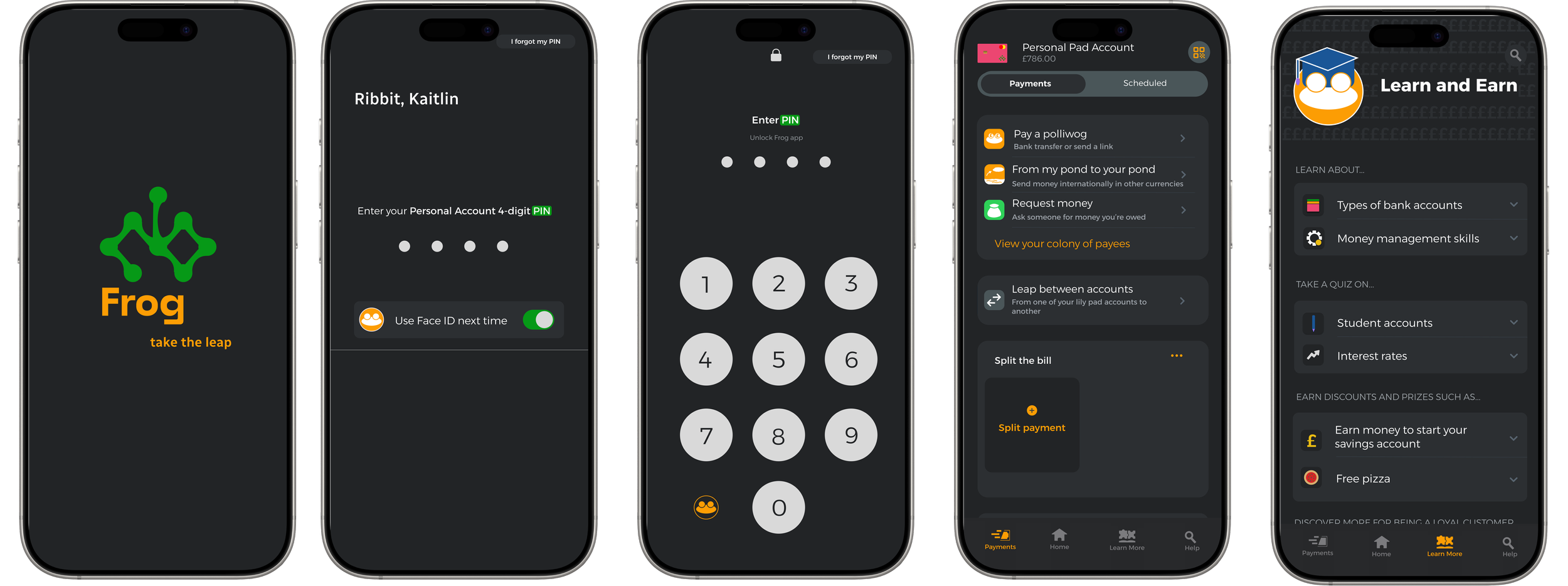
Frog is a modern, sustainable and ethical online-only bank.
Targeted towards an audience aged between 16-24.
Encouraging young people to gain empowerment and freedom through the teaching of financial literacy. This is achieved using user-friendly design and our ‘Learn and Earn’ scheme.
The app rewards users for participating.
A transparent, trusted bank that cares about the next generation. Prioritising growth and independence.
Project Overview
Research
Design Process
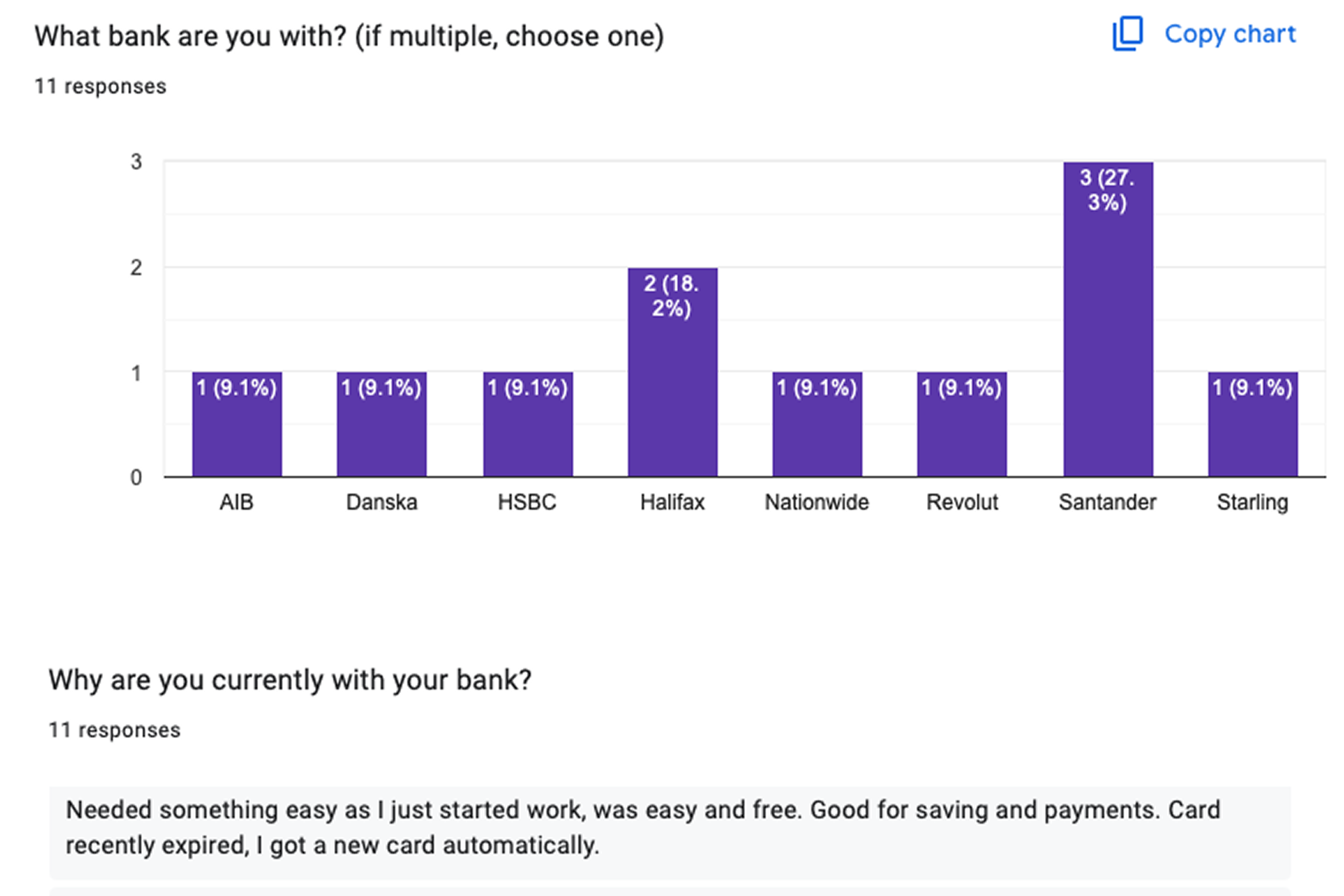
User Data Collection
I conducted a survey to collect quantitive and qualitative data. I gained insight which created a steady baseline for me to understand what users liked, disliked and desired. The data revealed gaps for improvement in current banks, revealing a clear path for research topics. User Research
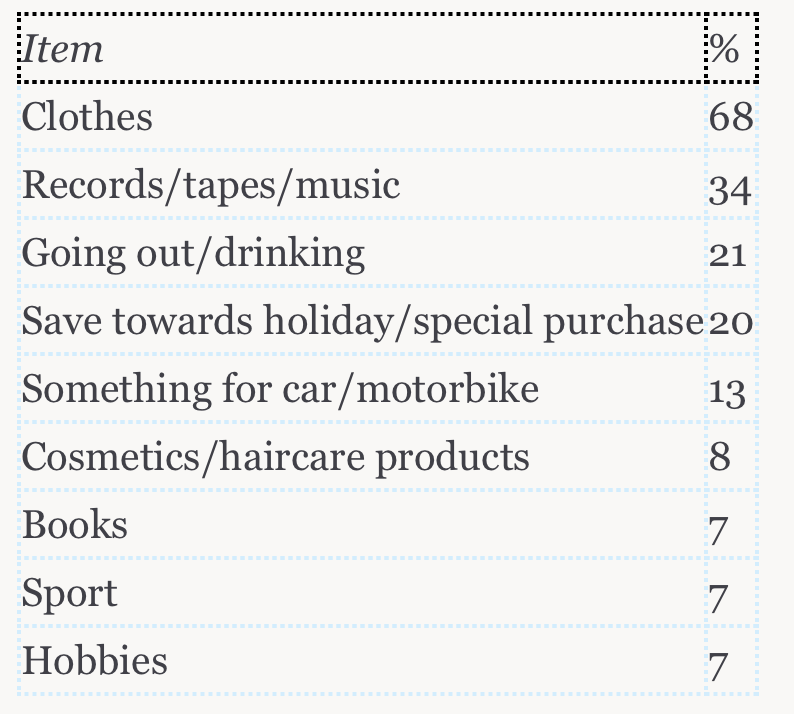
Banking apps failed to make learning about money appealing, lacking the fun element I wanted to incorporate. The data showed me users wanted to learn but didn’t know where to go and had little incentive to learn. This lead to me designing my app based on ease of access to learning and earning.
I firstly needed to understand the users habits of my targeted audience. My research delved into their lifestyle and statistical trends within the user group. I gained insights on how easy access to finances can impact debt later in life.
I researched patterns in spending and I challenged current UI structures already in place.
Define
Problem Statement
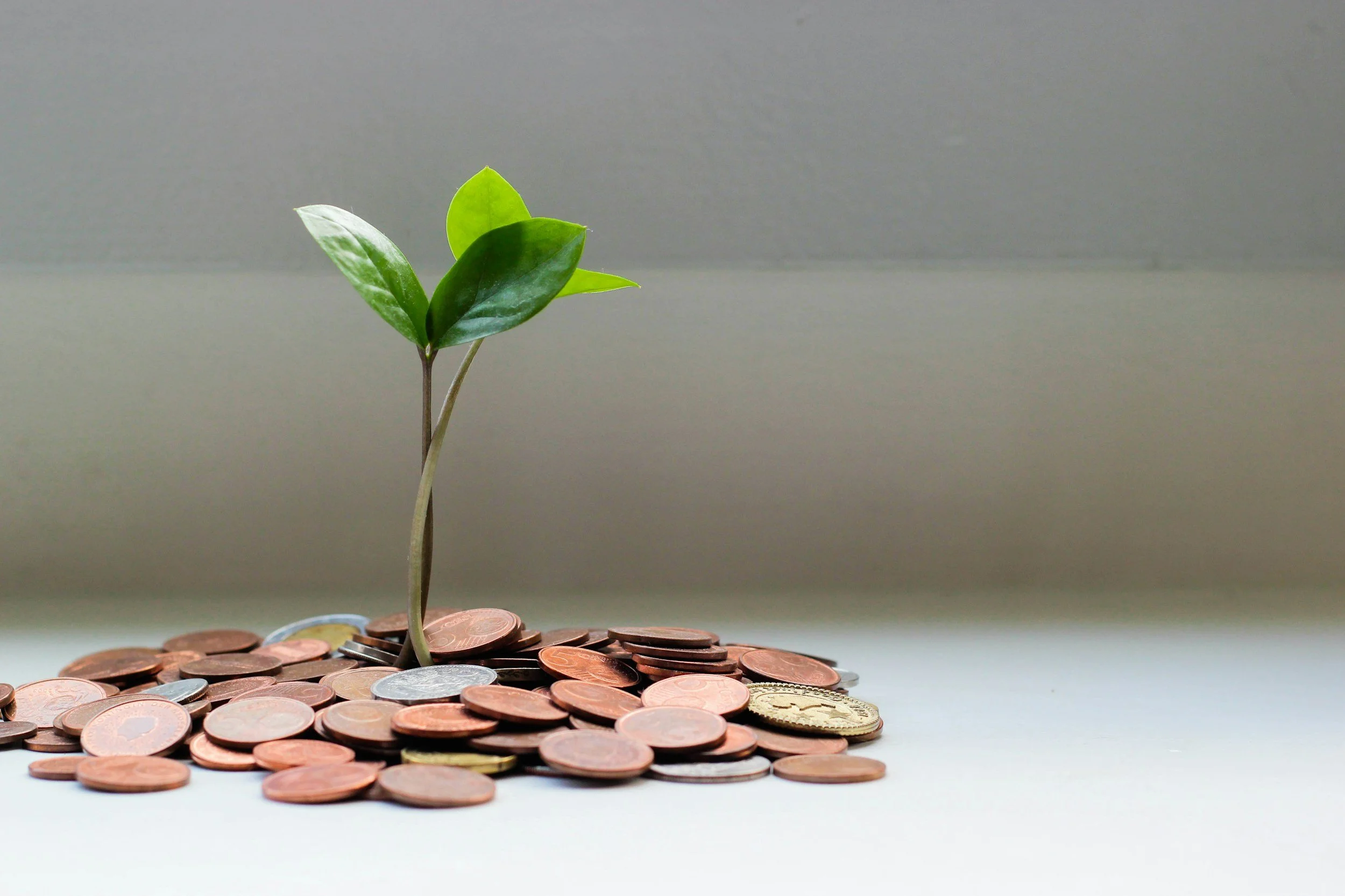
Bethani has just left upper sixth and has got a full time job to save up for her gap year to travel. She needs to gain financial literacy. She struggles because the current framework of existing banks is confusing, and they offer little incentive to learn
User Needs
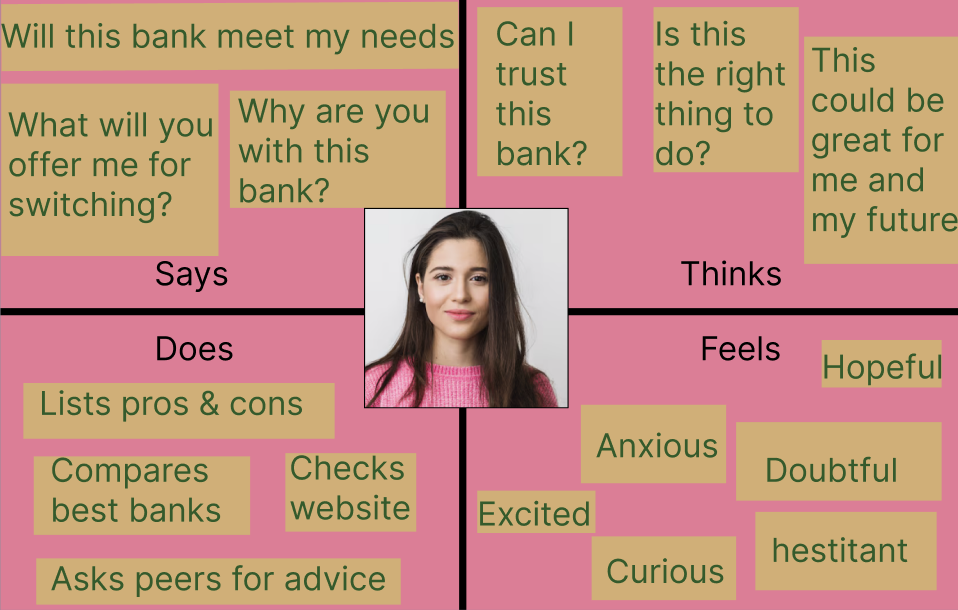
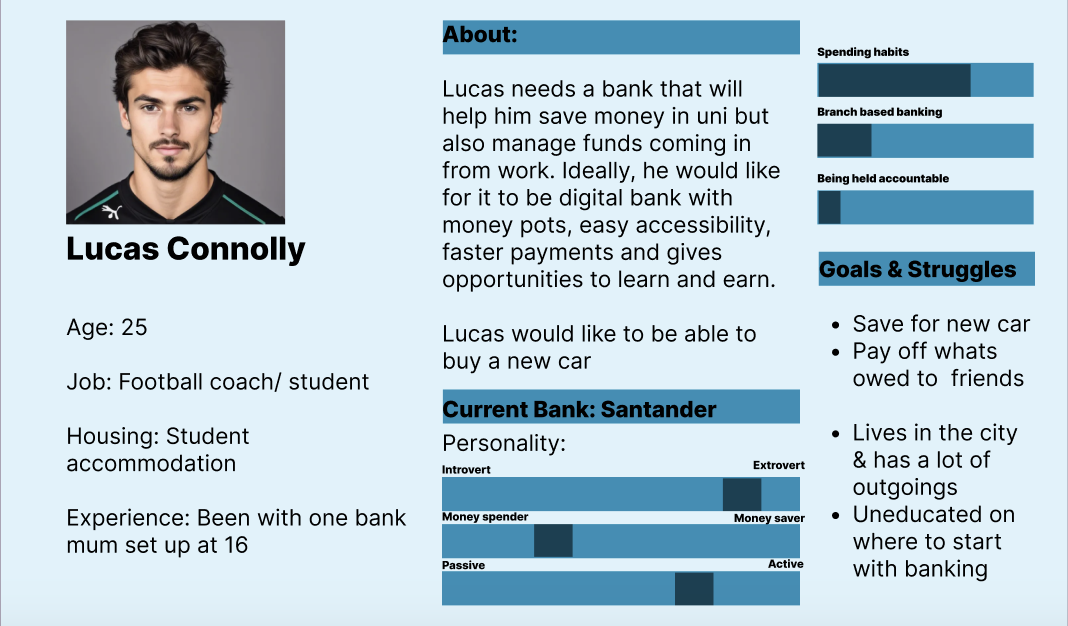
To understand the user, I created empathy maps, user profiles and user stories from feedback in my data collection. This encouraged empathetic user-centric design, gaining insight into pain points and user fears, goals and desires. Ideation
Mind Mapping
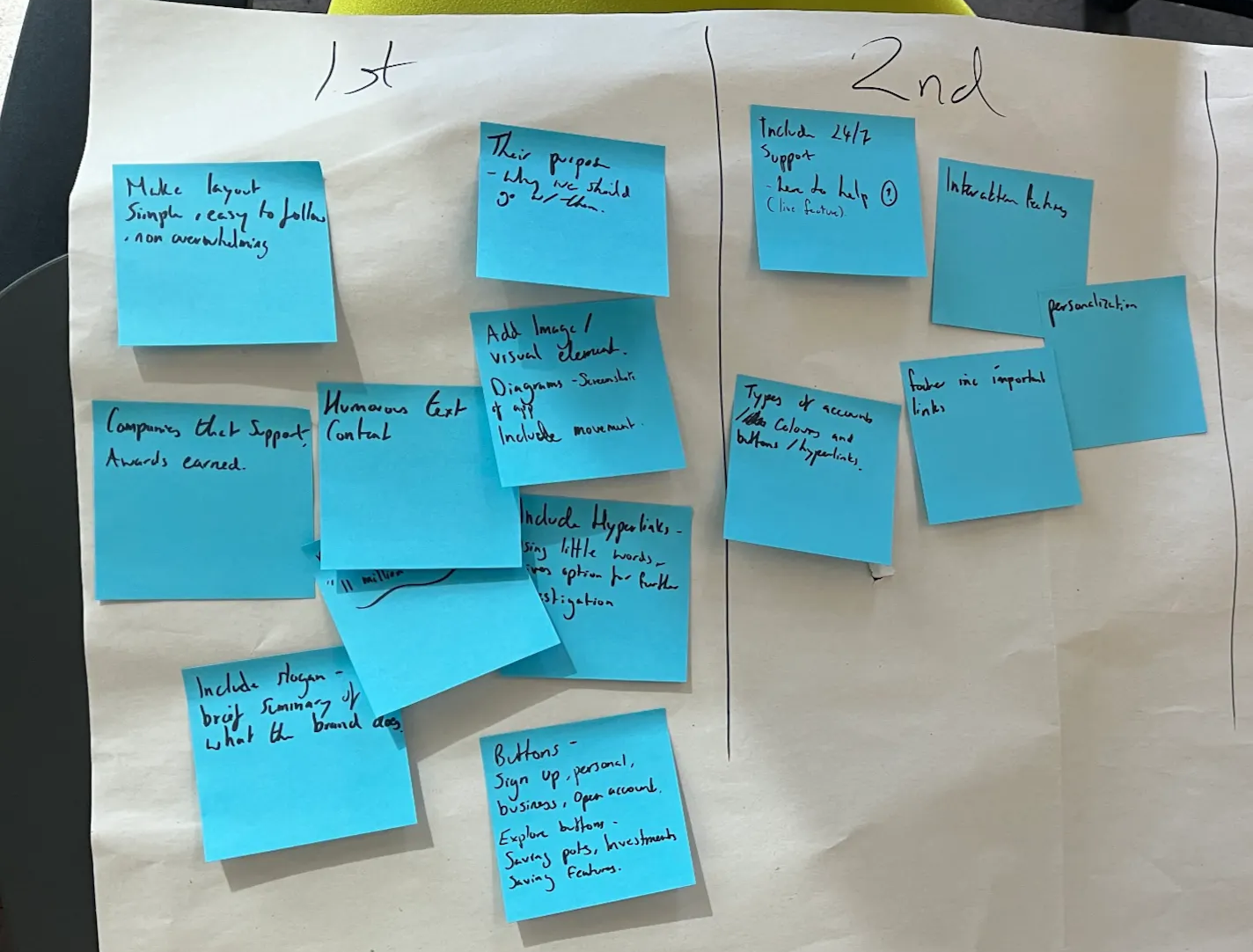
After gaining insight from the survey, I prioritised design decisions on sticky notes. This sparked visual ideas for me, on how I'll approach my UI and structure to meet the set goals. This helped me navigate pathways to my ideation and understand what is necessary for smooth UI.
Ideation and Sketches
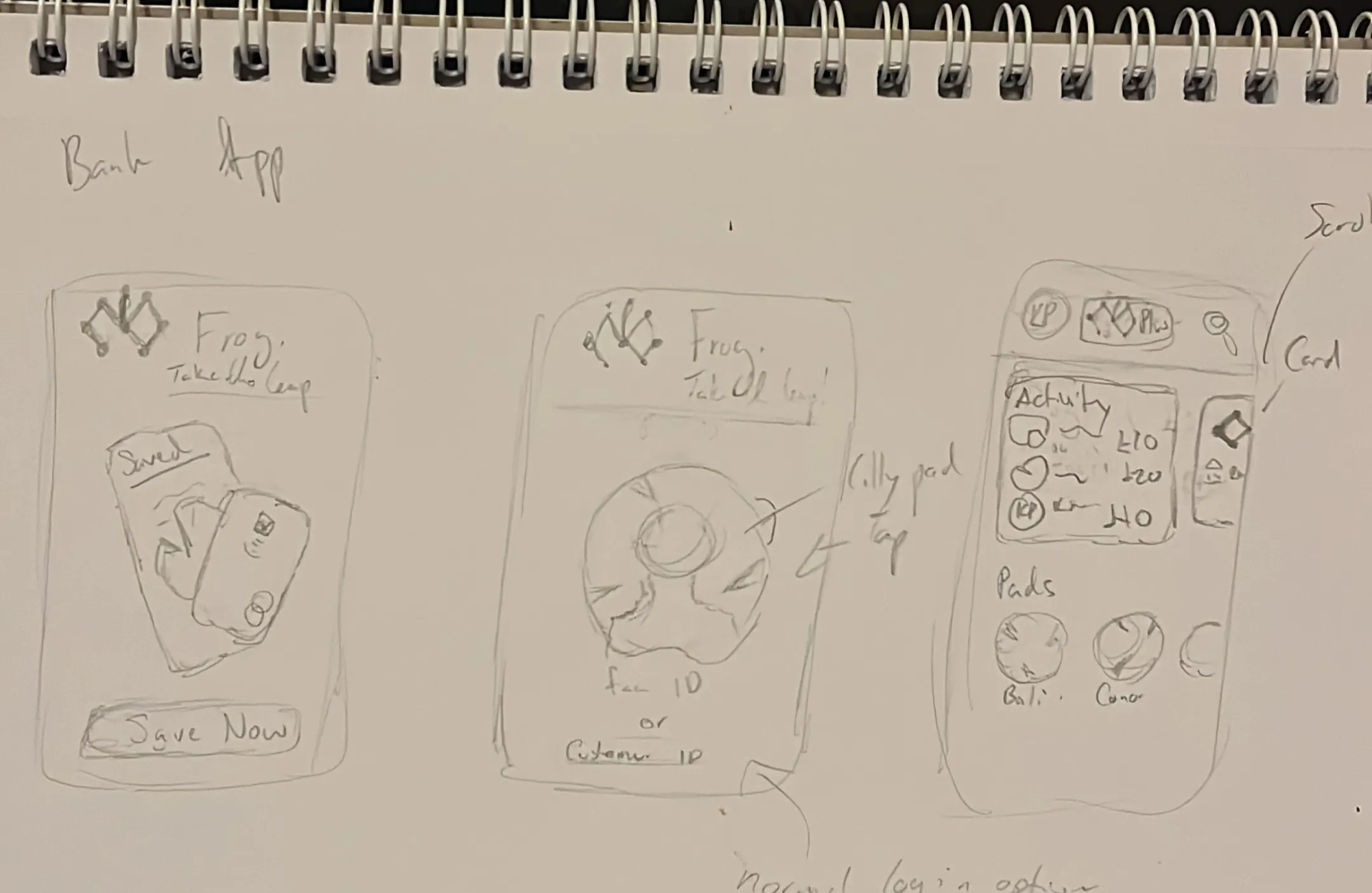
Initial feedback from users in the survey revealed that as well as the, lack of incentives for learning, the login process of existing banks caused friction. I followed similar frameworks to my competitors to scope design ideas - striving to achieve a professional and clean aesthetic with ease of access to the app. I followed similar composition and framework from other apps to maintain professionalism.
Development
Lo-fi Wireframes
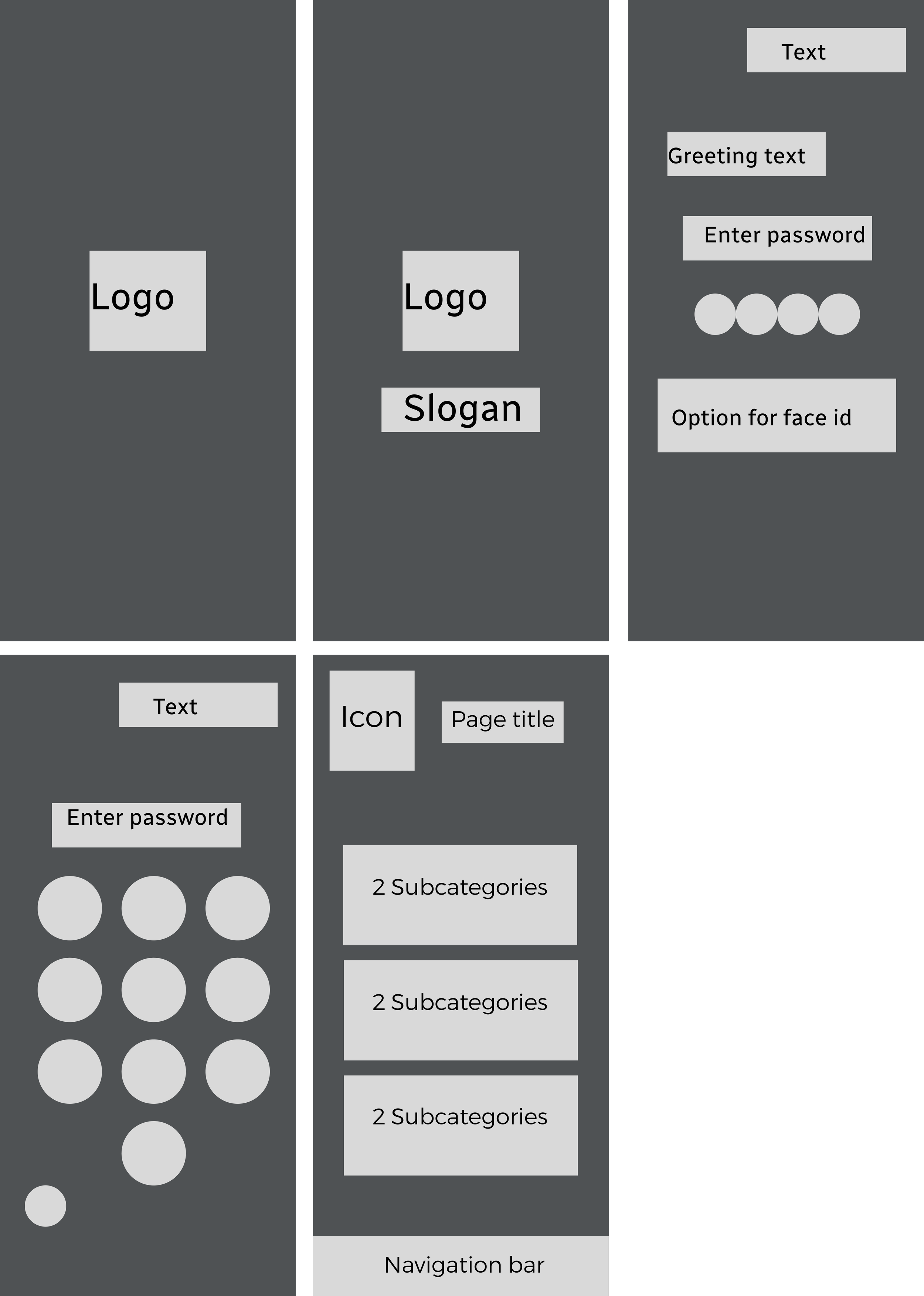
I wanted users to have smooth, quick access to their bank without the friction of pins / passwords. I strategised implementing a facial recognition process. I created lo-fi wireframes to have a clear plan before designing. I focused on information architecture, hierarchy and effective placements for features ensuring smooth user flow.Hi-fi Wireframes
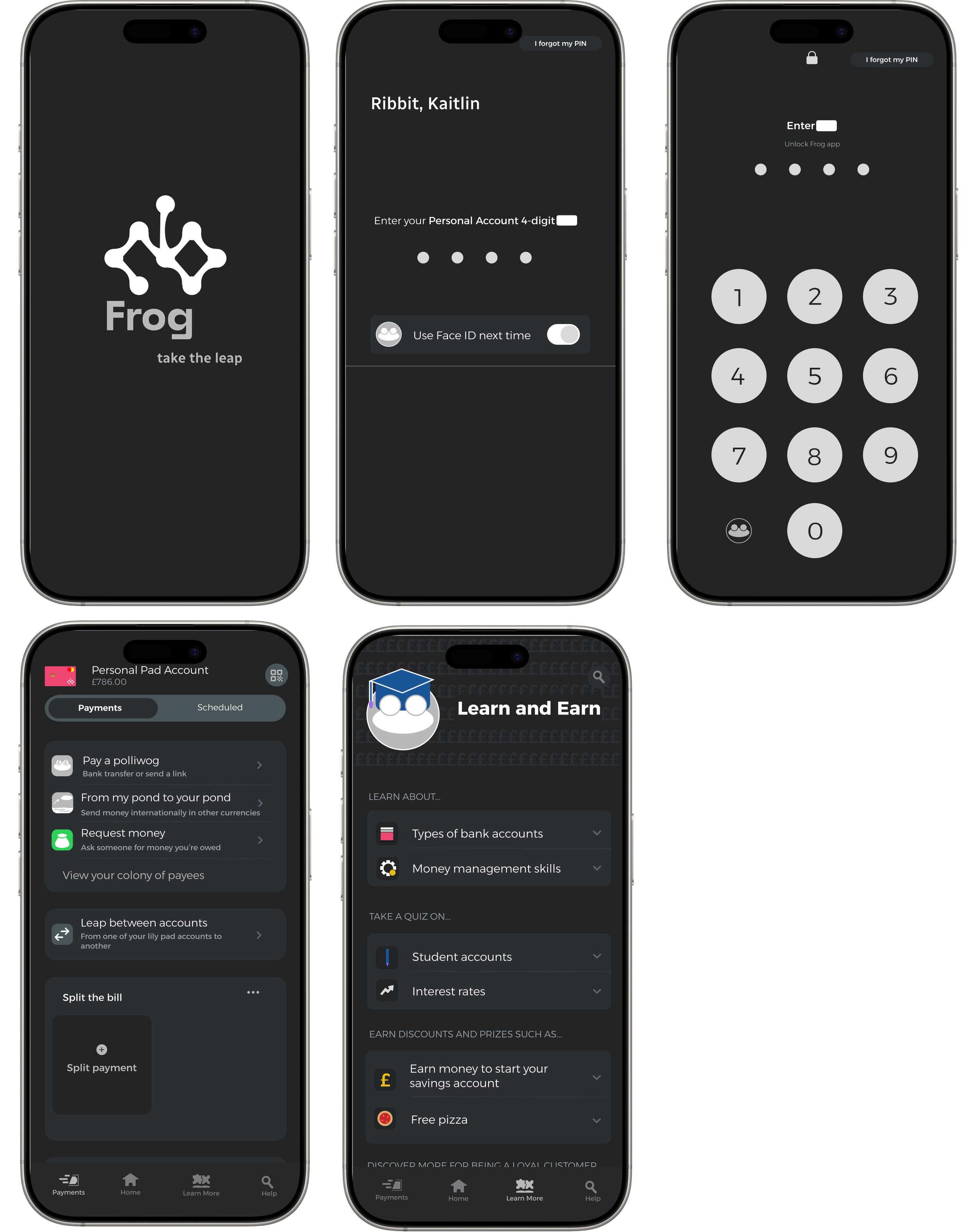
User feedback showed login process caused friction. I created hi-fi wireframes to showcase the new features were necessary to overcome these issues. Ensuing that the navigation within the app was accessible and simple.Design Decisions
I aimed to be strategic with my design decisions. I concentrated on research supported colour palettes as well as implementing brand identity principles. I strived for my brand to be perceived as friendly, bold, fun and helpful. Testing, Feedback and Iteration
Feedback and Iterations
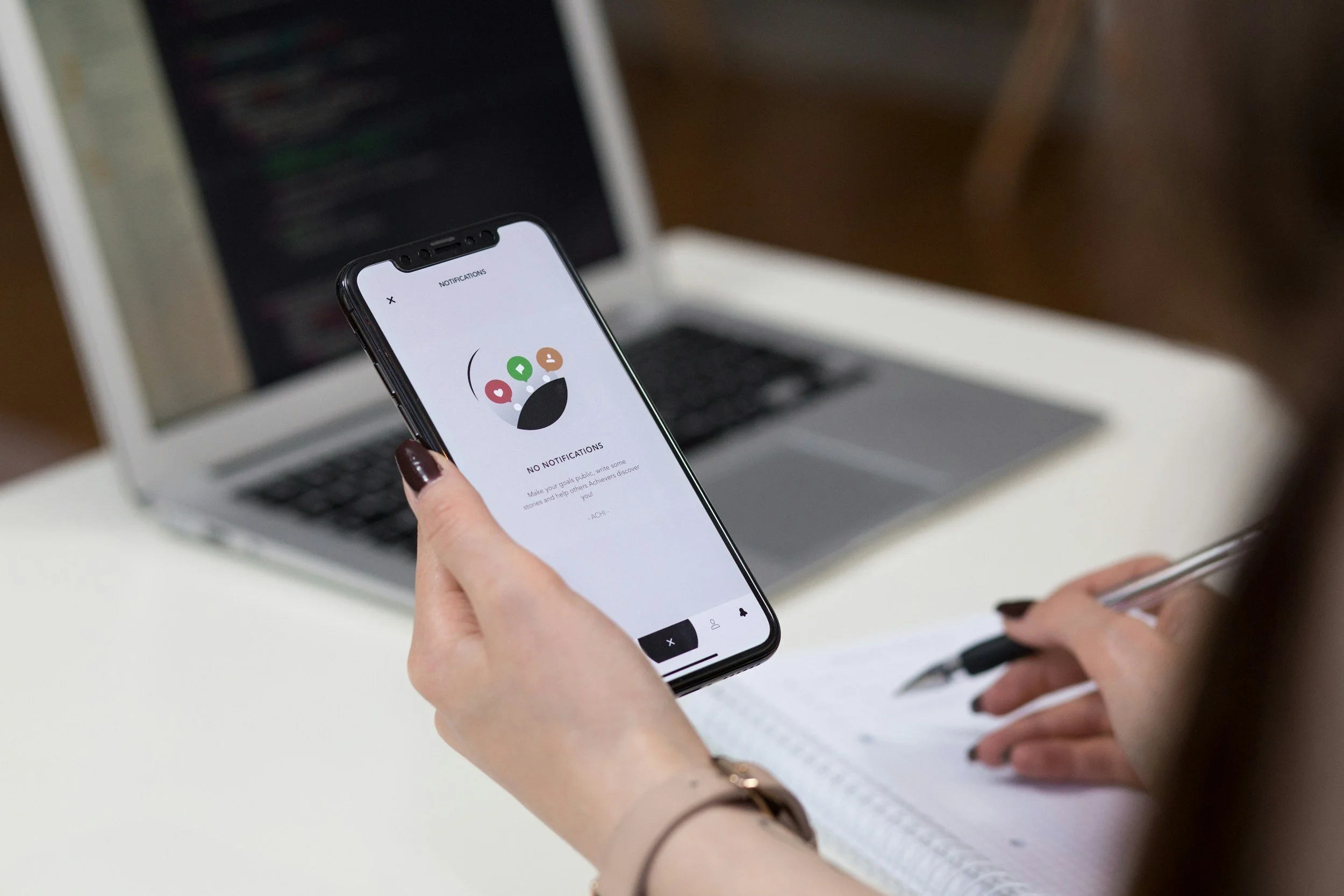
I created designs, but after receiving feedback and further research, I chose to explore other ideas. I created a more suitable aesthetic for my brand identity. I designed a new logo and name, which received positive feedback.
Initial sketch feedback demonstrated hierarchy was not clear, leading me to focus on smooth app access as a priority. Therefore, I simplified and reconstructed.
When prototyping, I was consistently testing to ensure transitions were seamless.
Reflection
Pro’s and Con’s from my perspective

Overall, I'm happy with my banking app. I dedicated myself to creating a unique logo that looked technical, fun and friendly. I utilised word play in my brand language, and gained a wide range of research to support my decisions and to deeply understand my users habits and patterns. My downfall is that it took me too long to establish a brand identity because I couldn't come up with a well suited logo and name. This left little time to implement the overall structure of my app design layout. If I were to do this project again, I would implement a double diamond method and set time sprints to give myself boundaries - utilising my time more effectively.Explore my project in more depth